Updates

Get Ready for Summer

With our personalized running and nutrition program

Certified running & nutrition coaches support you every step of the way, so you can take control and begin living your best, healthiest life. 

Stay Connected!
Sign up for our monthly newsletter to receive program updates & exclusive promotions
Follow Us

Search

Entries in recovery (8)

Wednesday
Apr102013

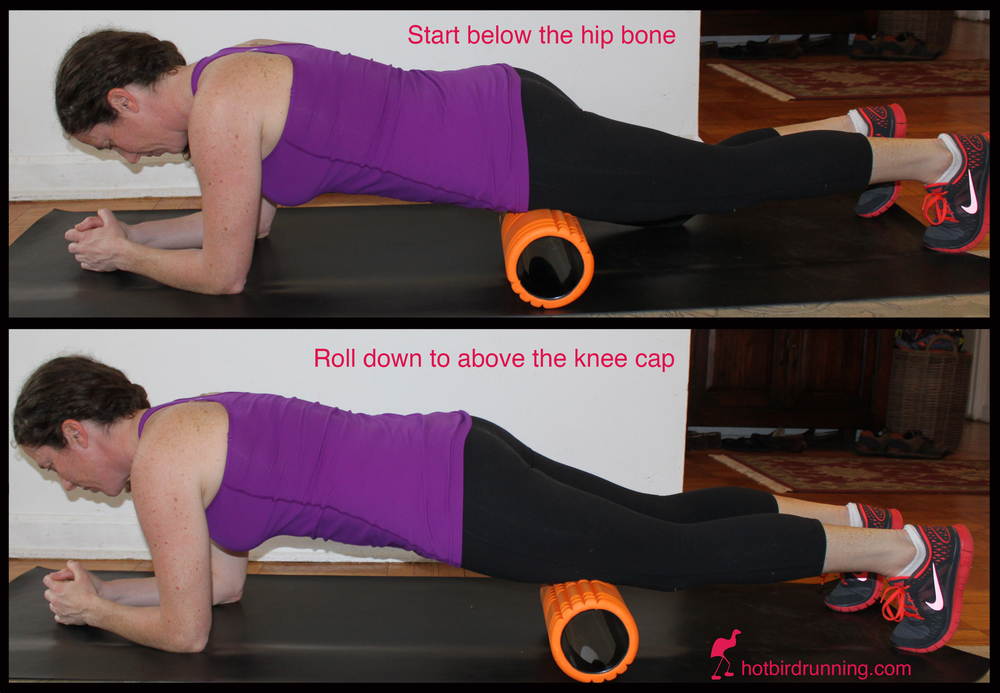
How to Foam Roll your Quads

We love using our Trigger Point Grid foam roller after a long run to loosen up our quads and reduce soreness. Use your body weight to add more pressure or get a little arm workout in and hold yourself up to reduce the pressure on the roller.

Start at your hips, where the quads attach. Roll down 1-2 inches and then slowly move your body and leg left to right. Roll down another inch and repeat. Stop just below the knee cap (about 1 inch above). Rocking the body from left to right helps break up any knots that form while exercising.

Foam rolling helps lengthen your muscles and restore them. Foam rolling is safe for a pre-workout as well if you are tight.


Monday
Apr012013

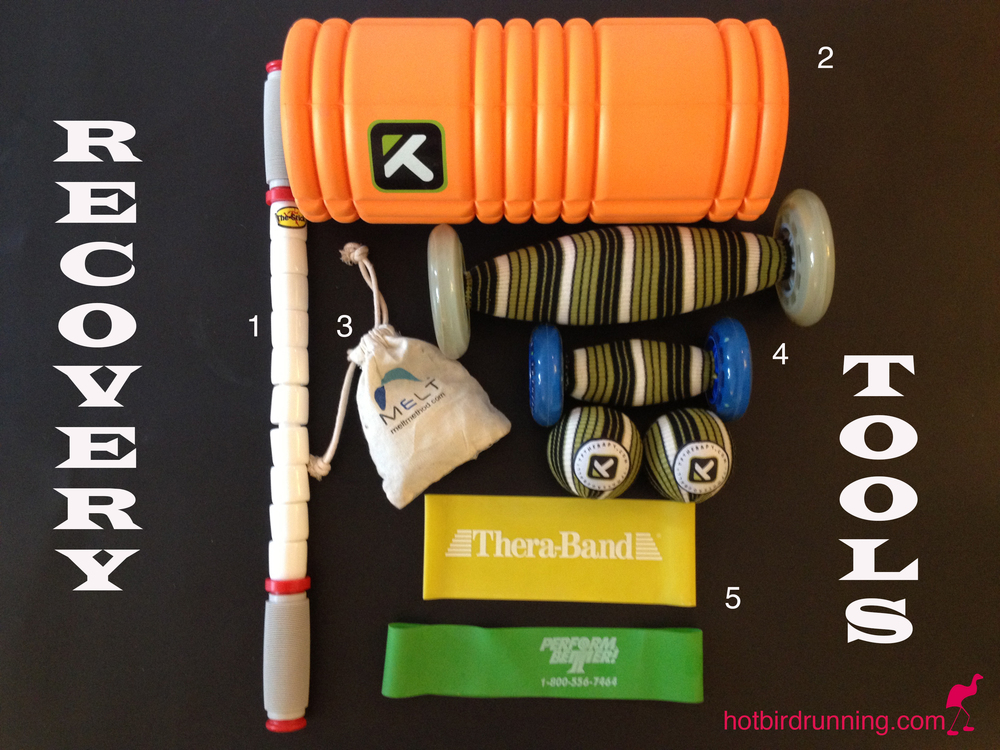
Recovery Tools

We are dedicating the month of April to recovery and to kick it off we are sharing our favorite recovery tools.

1 - The Stick - hurts so good. Great travel companion for long distance races.

2 - Trigger Point Foam Roller - the grids add a new dimension to foam rolling. Your IT band will never be the same again!

3 - MELT balls - we discovered the MELT Method thanks to Zoe of The Thriving Body in 2010. It's helped our feet and legs recovery quickly and ward off injury.

4 - Trigger Point rollers - deeper and more precise than the foam roller. The kit comes with a guidebook designed specifically for runners.

5 - Exercise bands - these guys help us keep our muscles strong and flexible. We use them for ankle, achilles and calf strength.


What's your favorite recovery tool? We love hearing suggestions from runners and active people!

Tuesday
Sep252012

Post Race Slump

Meghan is sharing her ups and downs after running a race and how to break out of the slump.

I ran two races back to back this September: Ragnar Colorado and the Great Cow Harbor 10k. Both races were fun, beautiful, with great friends and I felt awesome after each race. Ragnar Colorado was a 200 mile relay from Breckenridge to Snowmass. I ran 33 of the 200 miles and loved every minute of it - especially the scenery. I got back to NYC and Jessica and I ran the Great Cow Harbor together. We had fun this race and didn't stress too much about our time.

Since then, I've had a very rough time getting my mojo back since the races. I haven't felt like running and I'm tired, like all the time tired! Here's what I discovered in dealing with my post race slump.

1) Give yourself a break! You just ran a race, reward yourself with a few days off.

2) Gush about your race. Meet a runner friend for coffee and tell them all about your race. You trained, you sweated, you rocked it. Brag a bit.

3) Plan your recovery. I love active recovery plans that are full of yoga, spin classes and fun classes like kickboxing. Lay off the running for a few days (or a week or two) and work your muscles in a different way.

4) Pick your next goal. Find that next race that you want to run or your next vacation. Give yourself something to look forward to!

Beat those post race slumps by having a plan and giving yourself the time and space to recover, sleep and find your mojo!

Wednesday
Apr042012

Wellness Wednesday: Top 5 Power Snacks

We asked Loni Markman, an Integrative Nutitrion Coach, what snacks she recommends to her busy, athletic clients. Check out her Top 5 Power Foods.

As runners, I am sure you are thrilled about the early Spring weather we are having here in NYC.  I bet this means you are spending more time out running more and looking for the right foods to help fuel your run. As an athlete, your approach to nutritional can mean the difference between peak performance and sub-optimal energy and recovery.  I am often asked which energy bars or protein shake is best for my workout. Well, my answer is usually none.  Turning to “power” snacks is essential but we have to make sure they are not packed with sugar and limited in nutrients. Below is a list of my top 5 power foods to help you run faster and further and ease the recovery process.

1.      Acai –  Acai (ah-sigh-ee) is a tiny berry that is found in the Brazilian rainforests and has been used for centuries as medicine with the local tribes. It became popular through martial arts and was brought to the states in 2000 by surfers who used it in Brazil to support their intense workouts. Recent studies have found that the Acai is one of the most powerful foods in the world. The acai berry packed with antioxidants, has a nearly perfect amino acid complex to support muscle contraction and ease joint pain, has healthy fats to help promote cardiovascular and digestive health plus it increases energy levels and speed up metabolism. Thus making it a nearly perfect food to support your running.

HOW TO EAT IT: You can have it for breakfast in an Acai Bowl or add it to your smoothies and drink it on the go.

2.      Quinoa -  We all know your need to increase your carbs for your runs but you certainly do not need to turn to pasta or processed carbs for your fuel. Enter in my favorite superfood for super energy, Quinoa (pronounced Keen-Wa). Quinoa is an ancient grain (it actually falls more into the greens family but that is for another blog post)  that originated in South America and brings to the table a gluten free complex carbohydrate that is packed with protein, fiber, iron, magnesium all essential nutrients for runners.

HOW TO EAT: Quinoa is quick and easy to make. You can enjoy it sweet for breakfast or as a savory side dish. Click here for some recipes. http://elementsoffit.com/recipes/quinoa/

3.      Green Smoothies – It’s just like a fruit smoothies but packed with the nutritional powerhouse that greens offer us. These easy to make or buy smoothies are a healthy alternative to all those energy drinks out there and can really make a difference to your recovery and performance.  Greens have more vitamin and minerals than any other food out there plus they contain chlorophyll, which helps promote and carry oxygen in the body.

HOW TO EAT: Green smoothies serve as a great mid-afternoon pick me up or breakfast. The basic recipe is 2 cups of greens, 2 cups of fruit and 2 cups of filtered water blended in the blender and enjoyed!

4.      Bananas – Now I know you probably already know this one but being that it is one of the easiest on the go grabs I had to include the potassium packed banana. They didn’t only make my top five because all that potassium helps prevent muscle cramps but they are super easy to digest and will give you the energy you need to sustain a good run.

5.      Coconut water -  As you know hydration is key when running and getting a good sweat and coconut water, not Gatorade,  should be your answer to replenish your electrolyte levels.  Coconut water is natural and not filled with sugars and artificial coloring and sweeteners like so many other electrolyte drinks on the market. Why should you love it? Because it is rich in 5 essential electrolytes, potassium, sodium, magnesium, calcium and phosphorus.  These electrolytes are critical to proper recovery after you run or workout, making coconut water one of the best runners’ recovery drinks available today

About Loni: 
Loni Markman is not your typical Nutrition Consultant! Loni has been working in the field of wellness for almost a decade, helping clients find nourishment and balance in their everyday lives. She focuses on self love, weight management, pre and post natal and general women’s health. She has a true passion for educating and inspiring others on their journey to better heath.

Loni holds a Masters Degree in Health, a Bachelors in Business, a Certification as a Holistic Health Counselor from the Institute of Integrative Nutrition, a Certification in the Psychology of Eating with Marc David, she holds a Certification from Power Pilates and has extensive studies in Emotional Freedom Technique. All of which she infuses into her integrative coaching with clients. You can learn more about Loni on her websites –www.elementsoffit.com and www.positivebodyprogram.com.

Wednesday
Mar212012

Hello Recovery

Our Wellness Wednesday is back. Today Deacon, our favorite Ayurvedic practitioner, talks to us about recovery and what your body needs.

Hello Recovery,
 
Almost as important as our pre-run fueling is our post-run fueling. When we run, we lose minerals & vitamins through sweating, and our immune systems becomes weaker, as our bodies are repairing the tissues we’ve used during our activity. What to eat and how to refuel?
 
A good stand by are bananas. They are high in potassium, which regulates heart, kidney, nerves and digestive function. They are also high in Vitamin C and manganese, which helps to maintain normal blood sugar levels. From an Ayurvedic perspective, bananas can be a little tough to digest, especially if your digestive system has been weakened after your run. 
 
Personally, I love to reach for cooked leafy greens – specifically spinach or kale. One of my favorite post-running fuel treats is steamed spinach on brown rice toast with a little olive oil lemon juice and sea salt (hear me out, I’ll get to the portable foods in just a sec).

Spinach is an amazing food for runners, because it’s completely loaded with fabulous nutrients, like Vitamins A, B6, B2, C, E, K, magnesium, foliate, manganese, iron, calcium, potassium, phosphorus, zinc, copper, selenium, niacin Omega 3’s and protein! 
 
You can also use kale instead of spinach, and actually cook rice rather than use rice bread if you have the time.
 
Another one of my favorite post-run cooked treats is a smallish beet with a 3-minute egg mixed with a little olive oil and sea salt. Trust me, it tastes better than it sounds. Beets are high in foliate, manganese, potassium, magnesium, iron phosphorus and copper. Adding the egg adds protein, B2, 5, & 12 and Vitamin D, Omega 3’s.
 
If you like the idea of leafy greens, but think I’m insane if I think you have the time to make a meal after running, or if you want something after a race, I have two words for you: Kale chips. They are delicious, portable and nutritious. You can purchase kale chips at your local health food store or whole foods, or you can make your own from my recipe below. I like the ‘cheese’ flavor variety of kale chip  - not to worry; the ‘cheese’ is actually nutritional yeast.
 
If you have a sweet tooth, however, may I suggest the humble date? Dates are loaded with potassium, magnesium, phosphorus, Vitamin A and foliate. They are a little high in sugar, so I would recommend mixing it up a little pumpkin & sunflower seeds and maybe a few almonds. The nuts and seeds provide protein, B1, B2, B6, Vitamin E, zinc, copper and iron.

Remember, hydrating is also very important after running. Try to avoid drinking iced-cold water. You may have heard that drinking iced water makes you loose weight by making the body work harder to maintain body temperature, but in reality, it brings your metabolism to a grinding halt. Imagine throwing iced water on a camp fire. Try drinking room temperature water, or even warm water if you can get your hands on it!

Enjoy the recipes for portable post-run snacks. I’ve also included my recipe for an Ayurvedic trail mix, so you can take the mix with you for a post run munch.
 
Cheesy Kale Chips

1 bunch curly kale
1 cup cashews (soaked for a couple hours)
1 red bell pepper, deseeded
Juice of half a lemon (2 tablespoons)
1/2 cup nutritional yeast
1 teaspoon sea salt (or to taste)
 
Remove the toughest parts of the kale steams, wash then tear the leaves into bite-size pieces. Place pieces in a large bowl 
 
Cheesy coating: 
Combine soaked cashews, bell pepper, lemon juice, nutritional yeast and sea salt in a blender or food processor and run for a minute or two until smooth.
 
Add the cheesy coating to your bowl of kale and massage it in with your hands.  
Spread kale pieces on parchment paper on baking trays, and bake at 200 degrees until crispy, about 45 minutes (but again, all that matters is that they MUST be crunchy).
 
Trail Mix (makes 4 cups)

1 cup of Sunflower seeds
1 ½ cups raisins
½ cup dried apricots (chopped coarsely)
½ cup dried apples (chopped coarsely)
½ cups raw almonds (chopped coarsely)
¼ teaspoon of Cinnamon
1/8 teaspoon ground cardamom
 
Mix all ingredients in a large bowl with a spoon, and store in a cool dry place.

Deacon founded Daily Veda after working in Global Advertising for 16 yrs. He practices yoga, runs and promotes healthy living through natural eating and Ayurvedic medicine. His Veda Bars are AMAZING. Best tasting bar ever and you can pronounce all the ingredients! He’s a wealth of knowledge and fun.

Monday
Mar192012

Half-Marathon Recovery

Here are our top tips for optimal recovery the week after a Half-Marathon:

1) Take at least 2 days off from running and any strenous activity

2) Ice and then ice those muscles and joints some more (continue icing for as long as you feel sore)

3) Take a yoga or pilates class or go for a bike ride a few days after

4) Listen to your body - your recovery time will be different from others. Start running again when you feel ready! Make your first run back an easy, short run.

5) Get a massage! A massage will help repair and heal your muslces so you can get back out there.

6) Reward yourself and smile! You did it!

Monday
Jan302012

Tip of the Week: Tools to Aid Recovery

Recovery is a major aspect of any training plan (from a 10k race to a marathon). It's just as important as the long run or the weekly tempo run. Recovery can be an overlooked and often forgotten part of your training.  Here are a few recovery products that travel with us and can be used just about anywhere - we highly recommend all of them!

What our Run Recovery video to see our favorite products.

The Stick: we use the "Sprinter Stick" because it's firm and short. You control the pressure, either getting a light or deep massage. Great to use on the legs and easy to pack!

The Grid, from Trigger Point Therapy. This is a light weight, versatile foam roller. We like it because it's a 1/4 of the size of a foam roller, firmer and hollow (great for packing!)

Airex Balance Pad.  This balance pad, which we bought at the suggestion of our Physical Therapy, is a training tool that combines exercise and balance skill to improve strength and coordination. We love it for strengthening our ankles and knees.

Tuesday
Oct042011

7 Reasons Why Massage is Great for Runners

We asked one of our favorite Brooklyn massage therapists (who has helped us recover from many a long run) to discuss the merits of massage and why it's great for runners. 

by Jennifer Mayer, LMT

PREVENT: Massage can help prevent injuries by increasing fluidity in tissues, increase range of motion and increase flexibility. Additionally, massage is an excellent way to gain valuable information about the condition of your muscles and work out any potential areas of tightness that could lead to an injury.

STRETCH: Stretching improves range of motion, muscle flexibility and prevents injury. All three are important factors to keep you running healthy and injury free.

FLUSH: Running produces lactic acid, a metabolic waste product the gets stuck in the muscles. Lactic acid causes pain and discomfort by irritating the nerves in the muscle tissue. Massage flushes lactic acid out of the muscles, enabling you to recover quicker, with less pain and discomfort from workouts.

EASE: Massage helps the body move freely and with more ease. When muscle repairs itself after exercise and strength building, the muscle fibers are misaligned. Massage helps realign these fibers.

HEAL: By increasing blood flow, massage helps injuries recover faster by bringing essential nutrients and tissue repairing cells to the injury site. This increased flow also removes wastes created by the injury quicker, further supporting the healing process.

SUPPORT: Massage with an emphasis on structural alignment helps runners keep good posture and structural integrity by releasing tightness throughout the body. Releasing tight feet can do wonders for your gate and low back or hip pain.

DOWN TIME: Rest is an important aspect of any training regime. Massage encourages time for rejuvenation to restore your reserves.

Jennifer Mayer is a licensed massage therapist practicing in Brooklyn, NY. Over the past 8 years as an LMT Jennifer has had the pleasure to work with athletes from all backgrounds. From eager rock climbing kids, to professional cyclo-cross racers to individuals training for 10ks and triathlons to Olympic runners. Jennifer also specializes in prenatal and postpartum massage. You can visit her website www.mamamoonnyc.com for more information.